Costa, Nino |
| PAINTER, REVOLUTIONARY (ITALY) |
|
BORN 15 Oct 1826, Roma, Lazio - DIED 31 Mar 1903, Marina di Pisa, Toscana BIRTH NAME Costa, Giovanni GRAVE LOCATION Roma, Lazio: Cimitero Monumentale del Verano, Piazzale del Verano, 1 (Altopiano Pincetto, riquadro 30) |
|
Nino Costa was the son of Giocchino Costa (d.1842) and Maria, born Chiappi (d.1857). When he was twelve years old he met painter Vincenzo Camuccini (1771-1844) who encouraged him. After five years at the Jesuit college at Montediascone he returned to Rome in 1843. There he received drawing lessons from Luigi Durantini (1791-1857). At the Accademia di San Luca his teachers were Francesco Coghetti (1801-1875), Francesco Podesti (1800-1995) and Filippo Agricola (1776-1857). In 1848 he fought in the defense of Vincenza and in 1849 he fought under Garibaldi. He was as a municipal councilor in the Roman Republic of 1849. After its failure he was forced to flee from Rome to Arricia, where he lived until 1853. In 1850-1851 he travelled to Naples. In 1852 he met the painters George Mason and they painted together in open air. In 1853 he met Frederic Leighton and they became lifelong friends. He often lived in Florence and he was in contact with more foreign painters. In 1859 he served in the war as a volunteer. In 1862 he returned to Rome and in 1867 he moved to Florence once more. In 1870 he participated in the liberation of Rome, and he became a city councilor of Trastavere. He founded several artistic groups, and he frequently exhibited in London. in 1897 the National Gallery acquired his painting "The Awakening of Nature". In the 1890s he dictated his memoirs to his daughter Giorgia Guerrazzi Costa. He died in 1903 in Marina di Pisa and he was buried at the Verano cemetery in Rome. In 1904 Olivia Rossetti Agresti (1879-1960) published "Giovanni Costa, His life, works and times". His daughter published his memoirs in 1927. |
| Images | |
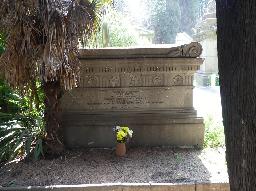 The grave of Nino Costa at the Cimitero Monumentale del Verano, Rome. Picture by Androom (21 Apr 2023) |
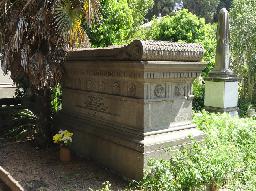 The grave of Nino Costa at the Cimitero Monumentale del Verano, Rome. Picture by Androom (21 Apr 2023) |


