Ewers, Hanns Heinz |
| WRITER, ACTOR, POET, PHILOSOPHER (GERMANY) |
|
BORN 3 Nov 1871, Düsseldorf, Nordrhein-Westfalen: Immermannstrasse 22 - DIED 12 Jun 1943, Berlin: Corneliusstrasse 4a, Tiergarten CAUSE OF DEATH tuberculosis GRAVE LOCATION Düsseldorf, Nordrhein-Westfalen: Nordfriedhof, Danziger Strasse (Feld 78, Grab 55235 (ashes)) |
|
Hanns Heinz Ewers was the son of the painter Heinrich Ewers (1817-1885). His mother Maria (1839-1926), born aus'm Weerth, was a writer and a translator and she painted as well. He attended schools in Düsseldorf and Kleve, where he developed an aversion against schools and teachers for life. He wrote his first poetry when he was seventeen years old. Heinrich Heine was a mayor influence and in 1892 he enrolled at the Friedrich Wilhelm University in Bonn to study law like Heine. In 1893 he studied in Geneva and in 1894 he passed the First State Examnination in Bonn. His legal traineeship in Neuss was not a success. He preferred literature, occultism and most of all the nightlife above law. After he disturbed a spiritualist meeting a long legal fight followed and he was eventually sentenced to four weeks of imprisonment in Ehrenbreitstein Fortress. Although he never passed the Second State Examination he received a law doctorate in Leipzig. In 1898 he had an illegitimate daughter in Leipzig who was placed in a nursing home. In 1901 Ernst von Wolzogen invited him to Berlin for his Cabaret "Überbrettl". He recited satirical texts that soon became popular in Berlin. In 1901 he married the illustrator Ilna Wunderwald (1875-1957). They lived on Capri for a year where he wrote travel pieces and a series of fairy tales. In 1904 his marriage was in a crisis, and he lived separately from Lina for a while. In 1905 he started extensive travels with Lina, which he financed with articles that he wrote for newspapers. Mentioning the Hapag shipping line positively in his travel accounts earned him free passage on their ships. He travelled all over the world, visiting China, Australia, South America, and many other destinations. Between 1910 and 1921 he published his best-known works, three horror novels with their main character, Frank Braun, modelled on himself. In 1912 he divorced Ilna. From 1913 he wrote scripts for films, including "Der Student von Prag" directed by Paul Wegener. In 1914 he was in South America when the First World War Broke out. He stayed in the United States where he wrote propaganda for the German Empire. After his return to Germany, he was criticized for having stayed in the USA. His work was not popular anymore and his financial situation became difficult. In 1921 he married Josefine Bumiller, whom he had met in the USA and who had come to Germany. He knew Walther Rathenau since 1911 and corresponded with him. After Rathenau was murdered, he politically turned away from the Weimar Republic and towards Paul von Hindenburg. He advocated a fascist revolution in the early 1930s and was in close contact with Ernst Hanfstaengl. In 1931 he joined the NSDAP and his last novel "Horst Wessel. Ein deutsches Schicksal" was published in 1932. Neither Ewers nor the nazis were happy with the result and later the book was banned. He supported Jewish friends and more of his books were banned. Eventually his publication ban was lifted, but by that time his health had suffered. He died in 1943 in Berlin and his ashes were buried at the Nordfriedhof in Düsseldorf. Josefine died in 1974 and she was buried in the same grave. Related persons • knew Hanussen, Erik Jan • was the lover of Laurencin, Marie • cooperated with Mühsam, Erich • was a friend of Reinhardt, Max • was the lover of Strindberg, Frida • cooperated with Wegener, Paul |
| Images |
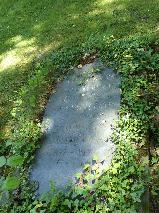 The grave of Hanns Heinz Ewers at the Nordfriedhof in Düsseldorf, Nordrhein-Westfalen. Picture by Androom (21 Jun 2025) |
Sources • Aubert, Joachim, Handbuch der Grabstätten berühmter Deutscher, Österreicher und Schweizer, Deutscher Kunstverlag, München, 1975 • Hanns Heinz Ewers - Wikipedia (EN) • Hanns Heinz Ewers - Wikipedia (DE) |


