Gamba, Teresa, Countess of Guiccioli

NOBLEMAN (ITALY)
BORN 18 Feb 1798, Ravenna, Emilia-Romagna - DIED 21 Mar 1873, Settimello, Toscana (near Firenze)
BIRTH NAME Gamba Ghiselli, Teresa
GRAVE LOCATION Settimello, Firenze: Villa adjacent to the Neto Park (family chapel)

Teresa Gamba was the daughter of Count Ruggero Gamba Ghiselli, a nationalist who was in favour of one Italian state. Her mother was Maria Amalia Macchirelli. Early in 1818 she married the much older Count Guiccioli. Shortly after her marriage she briefly met Lord Byron. They met again on the night of 3 to 4 April 1819 in Venice and they became lovers. In 1820 the pope announced her separation from Guiccioli. She lived together with Byron in Ravenna and Genoa until Byron left for Greece in July 1823. Her brother Pietro would die in Greece as well in 1827.

After Byron's death in 1824, Teresa became the mistress of Henry Edward Fox in 1825. She returned to her husband for a short time in 1826. In the same year she had an affair with Alphonse de Lamartine and in 1828 she became the mistress of James Howard Harris, the future 3th Earl of Malmesbury.

In 1832 Teresa visited England, in the company of her younger brother Vincenzo. In London she visited Newstead Abbey where Byron had lived and Byron's grave at Hucknall Torkard. In London she received much kindness from Lady Blessington and John Murray. She finally met Byron's half-sister Augusta. They talked for three hours but never met again afterwards. She visited England again in 1834 and 1835. 1835 she met Mary Shelley several times, but they were not real friends.

In 1838 the musician Ippolito Collet became her lover, but he died in 1840. She married the very rich Marquis de Boissy in 1847. After his death in 1866 she became involved in spiritualism. At a party hosted by Napoleon III she met the wealthy American Mrs. Mary R. Darby. They talked about Byron and became friends. After Teresa showed her two manuscripts in French about her time with Byron, Mary Darby helped her to transform them into book form. In 1868 "Lord Byron jugé par les témoins de sa vie" was published. One of them was published in English in 1869 as "My Recollections Of Lord Byron" in a translation by Hubert Jerningham.

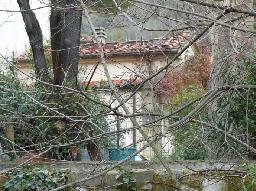
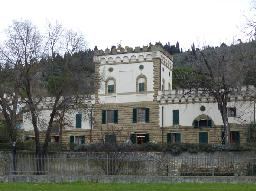
She spent her last years in Sentimello near Florence, where De Boissy had bought a villa for her known as the Villa Gamba. She died there in 1873 and she was buried in the chapel of the villa. Her papers were inhertied by her grand-nephew, Carlo Gamba. Fearing for the reputation of his family he hid them away. Only in 2005 her other manuscript was published as "Vie de Lord Byron en Italie".

Related persons
• knew Blessington, Margaret Gardiner, countess of
• was the lover of Byron, George Noel Gordon
• met Home, Daniel Dunglas
• met Leigh, Augusta
• was the lover of Malmesbury, James Howard Harris, 3rd Earl of
• corresponded with Morgan, Sydney, Lady

Events
22/1/1818First meeting between Lord Byron and Teresa Guiccioli. It was at the home of Countess Albrizzi. It was only a brief meeting. They properly met on 2 or 3 April, 1819 and started their affair after that second meeting. [Byron, George Noel Gordon ]
18/9/1819Byron and Teresa Guiccioli leave for Myra [Byron, George Noel Gordon ]
12/7/1820The pope pronounces the separation of Teresa Guiccioli and her husband 
1/4/1823The Blessingtons visit Lord Byron in Genoa. The ydrove to Byron's Casa Saluzzo, on a hill near Genoa. When he appeared after a while Lady Blessington was disappointed. He was no sinister figure, but a slim and friendly guy. They saw each other a few more times and she used them for her book "Conversations With Lord Byron". Byron's lover Teresa suffered several fits of jealousy because of these visits. [Blessington, Margaret Gardiner, countess of][Byron, George Noel Gordon ]
0/0/1825Teresa Guiccioli becomes the mistress of Henry Edward Fox 
0/12/1832Teresa Guiccioli visits Newstead Abbey. It was in the spring of 1832. She visited Newstead Abbey and went alone inside the Church of Hucknall Torkard. Even before the door could be closed she threw herself on the stone above the crypt where Byron was buried. She stayed there for an hour. [Byron, George Noel Gordon ]
20/6/1848Teresa Gamba writes Lady Blessington about Louis Napoleon Bonaparte. She was now Marquise de Bloissy and she wrote that Louis Napoleon's party was now very strong and especially in the country the name of Bonaparte had an enormous prestige. The fact that the communists supported him made the 'honest folk' a bit conspicious. She stated that he would be welcome if he could save 'this poor France'. [Blessington, Margaret Gardiner, countess of][Napoleon III Bonaparte]

Images

The Villa Gamba in Sentimello, near Florence.
Picture by Androom (22 Feb 2018)


The chapel of the Villa Gamba in Sentimello, near Florence.
Picture by Androom (22 Feb 2018)


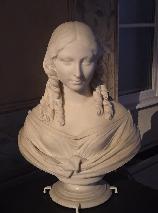
Bust of Teresa Guiccioli by Lorenzo Bartolini at the Byron Museum in Ravenna, Emilia-Romagna.
Picture by Androom (12 Feb 2026)


Sources
Enciclopedia Italiana di Scienzi, Lettere ed Arti, Instituto della Enciclopedia Italiana, Roma, 1949
• Marchand, Leslie A., Byron: a Biography, Alfred A. Knopf, New York, 1957
• Origo, Iris, The Last Attachment, The Story of Byron and Teresa Guiccioli, Turtle Point Press, New York, 2000
• Ridley, Jasper, Napoleon III and Eugénie, Constable, London, 1979
• Sadleir, Michael, Blessington-D'Orsay, A Masquerade, Constable, London, 1933
Teresa - Wikipedia (EN)
Teresa Guiccioli - Wikipédia (FR)


Gambetta, Léon

Published: 11 Jul 2026
Last update: 11 Jul 2026